A river with no bridge
In 1869 the East River carried more ferry traffic than almost any water in the world. Winter ice stopped the boats. Fog stalled them. New York and Brooklyn were two of the largest cities in the country and no bridge joined them. The East River is a tidal strait, deep and fast, and the ships that used it needed clearance.
John A. Roebling, a German born engineer who had built suspension bridges at Niagara and Cincinnati, proposed a span with a deck high enough for masts and a main span longer than any yet built. The New York Bridge Company hired him in 1867. In June 1869, while surveying the Brooklyn tower site, a ferry crushed his foot against a piling. Tetanus killed him within weeks.

Down in the caissons
His son Washington Roebling took over at 32. To found the towers on bedrock the crews sank two timber caissons, huge upside down boxes filled with compressed air, and dug out the riverbed from inside while the masonry rose on top. The Brooklyn caisson reached 44 feet below the water; the Manhattan caisson stopped in sand at about 78 feet.
Men who came up from that pressure too fast got caisson disease, now called the bends. Several died. Washington Roebling was struck in 1872 and never fully recovered. From a room in Brooklyn Heights he directed the work by letter and by watching through a telescope.
His wife, Emily Warren Roebling, carried his instructions to the site and taught herself the mathematics and engineering to answer questions in his place. For more than a decade she was the daily link between the chief engineer and the bridge. On opening day she rode across in the first carriage.

Steel and stone
The towers rose 276.5 feet above high water in granite and limestone, with Gothic arches for the roadways. Four main cables, each spun from thousands of steel wires, carried the deck. This was the first major bridge to use steel wire rather than iron. The main span measured 1,595.5 feet, the longest in the world at the time.

May 24, 1883
The bridge opened on May 24, 1883 after 14 years of work and about $15 million. President Chester A. Arthur and Governor Grover Cleveland walked across. Brooklyn declared a holiday. Fireworks lit the towers that night. Pedestrians paid one cent to cross on the elevated promenade.
Six days later a rumor that the bridge was collapsing started a panic on the stairs and 12 people died in the crush. The next year P. T. Barnum marched 21 elephants across to show the span was sound. It has carried traffic every day since.
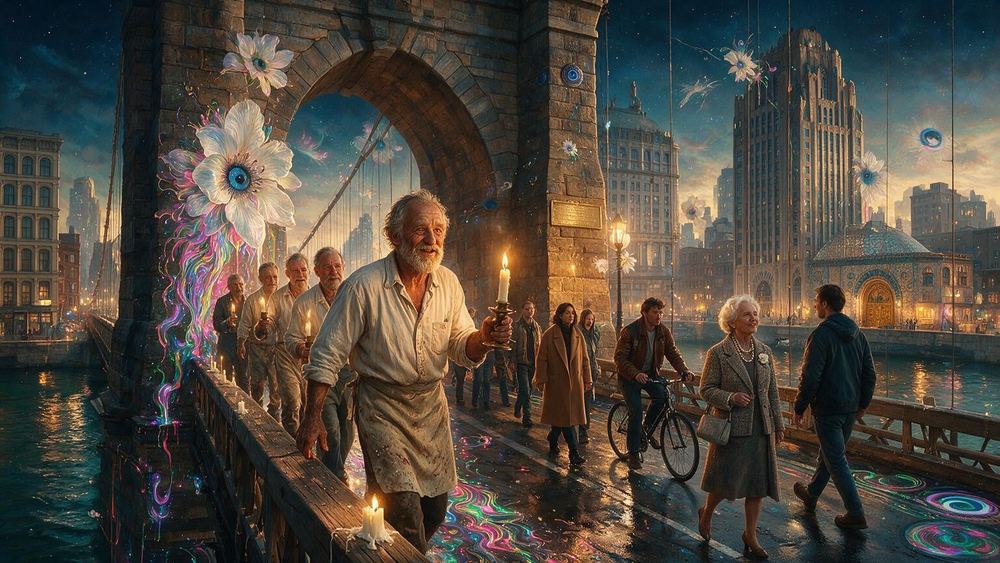
What it did to Brooklyn
The bridge made Brooklyn a place a Manhattan worker could live. Row houses and trolley lines spread east and south. Brooklyn's population, about 400,000 in 1870, passed 1,000,000 by 1900. The bridge also made the case for a single city, and the two shores it joined merged in 1898. The city named it a landmark in 1967 and the federal government named it a National Historic Landmark in 1964.

In the census
The Brooklyn Bridge room paints the crossing itself: the walkers, cyclists and the people who stop at the towers to look back at Manhattan. The Brooklyn room holds the borough the bridge built, and the Seaport room keeps the ships and dockhands of the river the bridge had to clear. On the atlas the bridge characters stand on the walkway between City Hall Park and Dumbo.
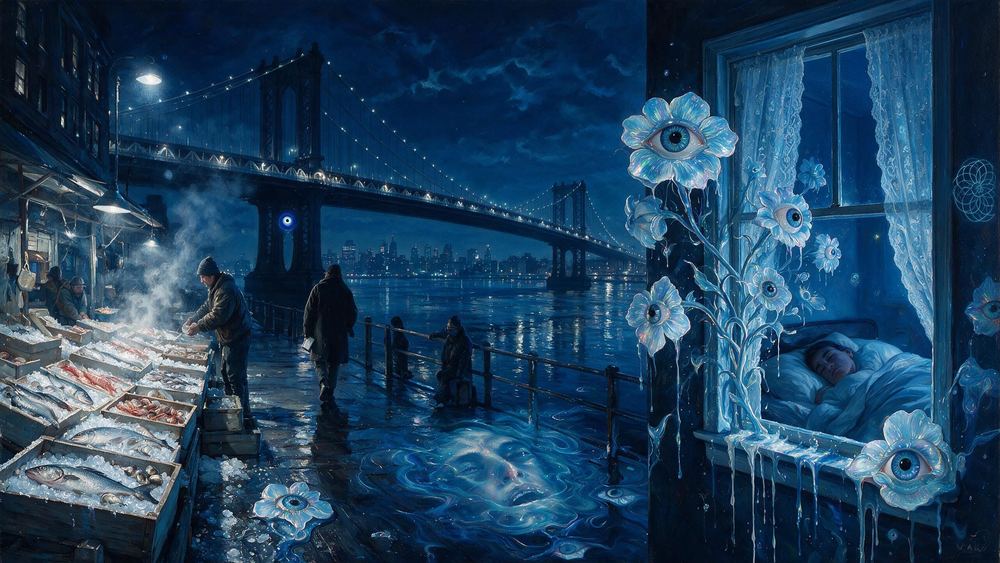




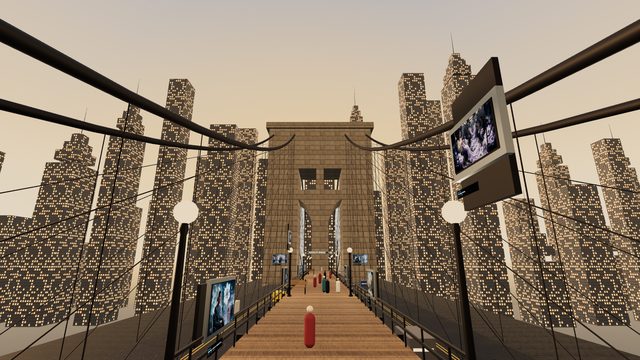 THE BROOKLYN BRIDGEBetween the cables
 BROOKLYN WATERFRONTAcross the river
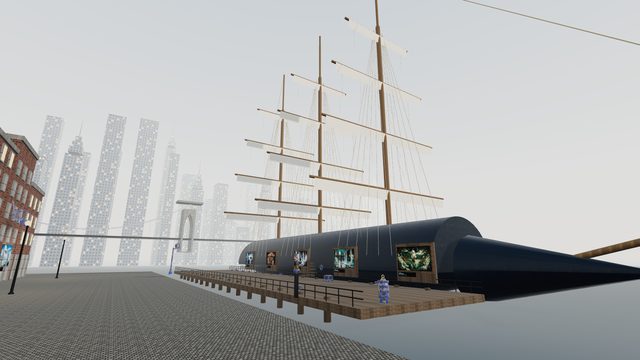 SOUTH STREET SEAPORTThe tall ship
When did the Brooklyn Bridge open?
May 24, 1883, after 14 years of construction. President Chester A. Arthur and Governor Grover Cleveland attended.
Who built the Brooklyn Bridge?
John A. Roebling designed it and died before construction began. His son Washington Roebling was chief engineer, and Emily Warren Roebling managed communication with the site after Washington fell ill.
What is caisson disease?
Decompression sickness, now called the bends. Workers who rose too fast from the pressurized caissons under the towers suffered it, and it disabled Washington Roebling in 1872.
Was the Brooklyn Bridge the longest bridge in the world?
Its 1,595.5 foot main span was the longest suspension span in the world when it opened in 1883.
- NYC Department of Transportationprimary
Owner and operator of the bridge; structural facts - Library of Congressprimary
Historic American Engineering Record drawings, photographs and period newspapers - National Park Serviceprimary
National Historic Landmark listing - NYC Landmarks Preservation Commissionprimary
1967 designation report - Brooklyn Public Libraryinstitution
Brooklyn collection on the bridge and the Roeblings - Britannicareference
General reference on the bridge and the Roebling family
Corrections are welcome. Write to the census at @degens on X and name the line. The reading room cites institutions, not the census; the census cites the reading room.